Acoustic Glazing Solutions
Specifier-grade sound insulation for London properties
Our acoustic glazing solutions provide exceptional sound insulation, creating a quieter and more peaceful indoor environment. Perfect for properties near busy roads, flight paths, or in urban areas with high noise pollution.
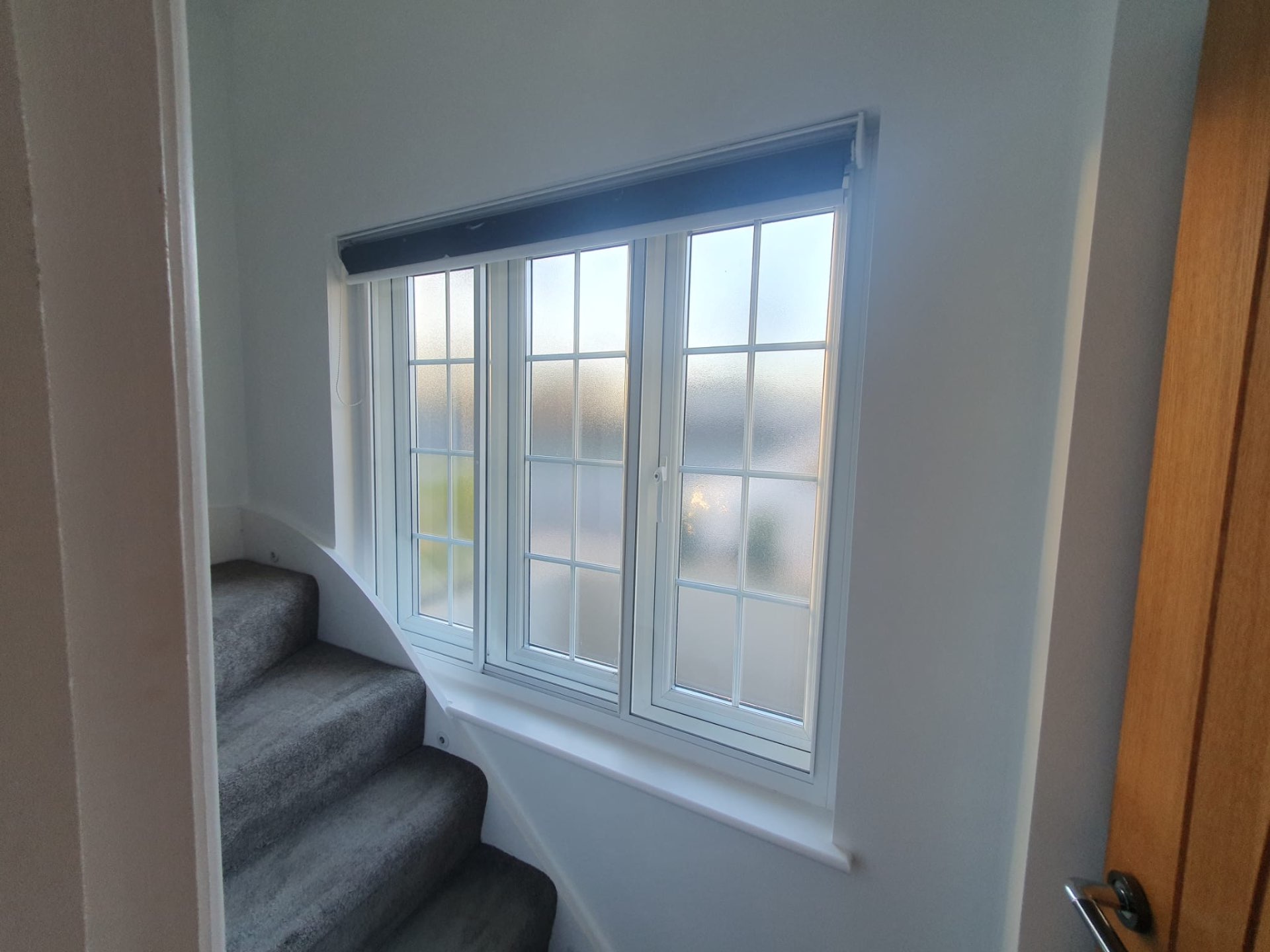
How Acoustic Glazing Works
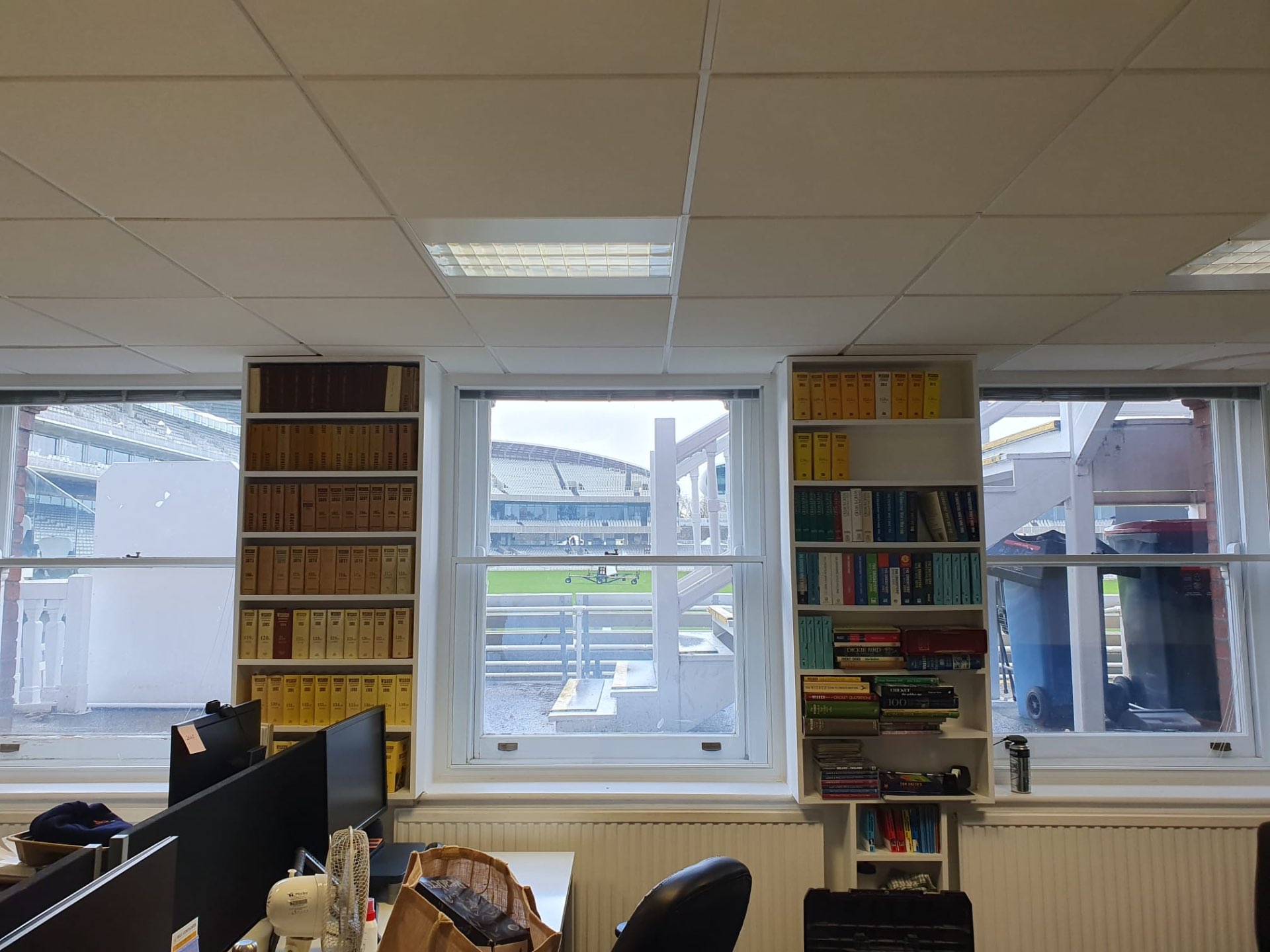
Acoustic secondary glazing creates an additional barrier against sound, with the air gap between your existing window and the secondary glazing significantly reducing noise transmission. Different glass thicknesses and laminated acoustic glass options further enhance sound reduction performance.
- Up to 80% noise reduction (45-50dB)
- Wide range of acoustic glass options
- Customizable air gap dimensions
- Perfect for listed buildings where replacement windows aren't allowed
Benefits of Acoustic Glazing
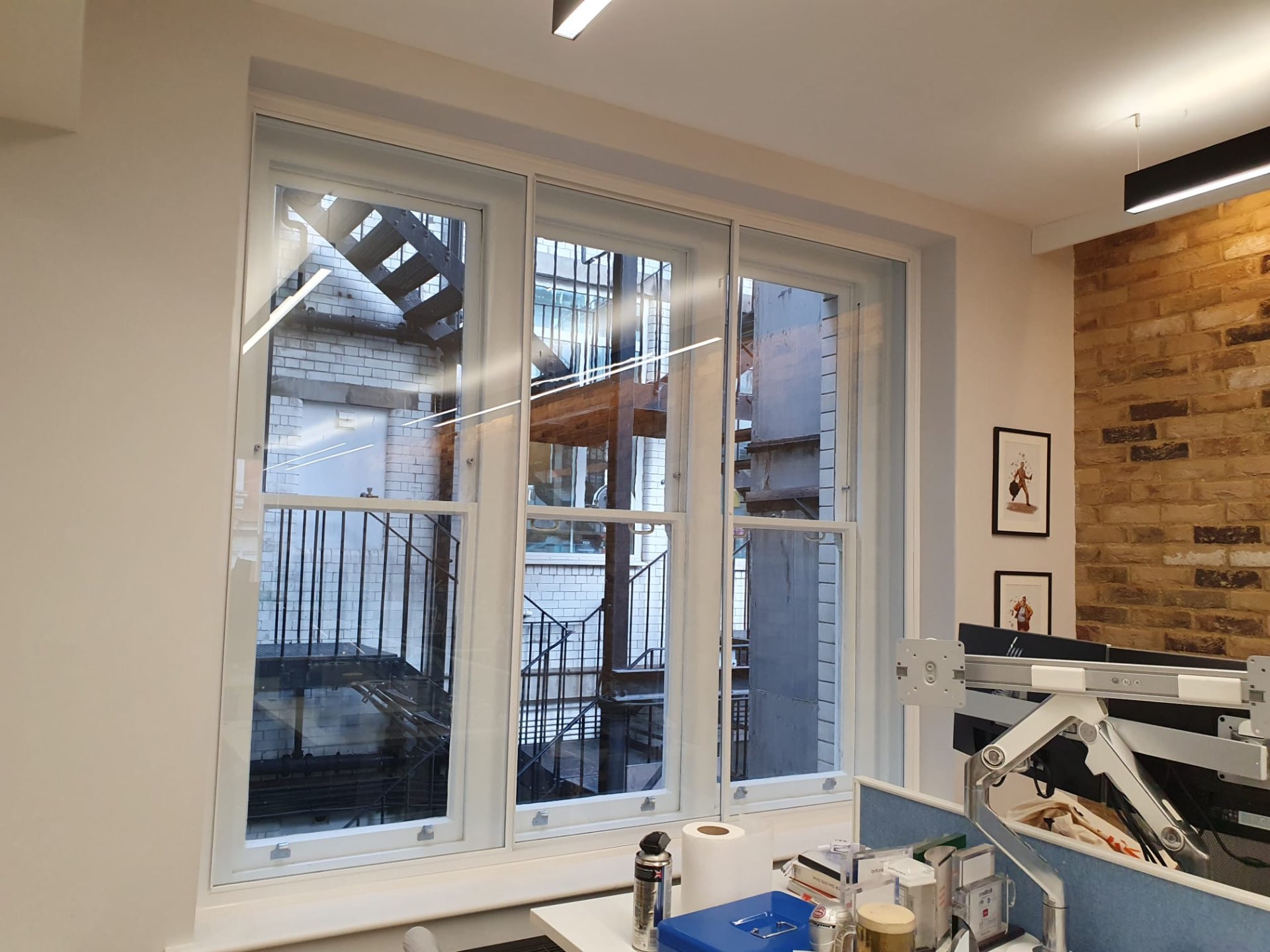
- Enhanced Comfort: Reduce external noise intrusion for a more peaceful living or working environment
- Improved Sleep Quality: Minimize nighttime disturbances from traffic or urban noise
- Increased Concentration: Create quieter spaces better suited for work, study, or relaxation
- Added Thermal Insulation: Additional window layer also improves energy efficiency
- Preserves Original Windows: Ideal solution for listed buildings and conservation areas
Acoustic performance specification
Acoustic performance is governed by three specifiable variables: the mass and damping of the secondary pane, the depth of the isolating cavity, and the airtightness of the perimeter seal. Weighted sound reduction index (Rw, measured to BS EN ISO 10140) rises as each is optimised, but traffic and rail noise are dominated by low-frequency energy, so the Ctr spectrum adaptation term is the figure that matters on a London arterial route. A unit quoted at Rw 45dB with Ctr −7 delivers roughly 38dB against bus and HGV rumble.
| Glass specification | Cavity | Indicative Rw | Best suited to |
|---|---|---|---|
| 4mm float | 50–70mm | 32–35dB | Quiet side roads, thermal-led projects |
| 6.4mm laminated | 100mm | 38–41dB | Residential streets with steady traffic |
| 8.8mm acoustic laminate | 100mm | 42–46dB | Bus routes, high streets, night-time noise |
| 10.8mm Stadip Silence | 100–150mm | 48–54dB | Arterial roads, rail corridors, flight paths |
Design targets and standards
BS 8233:2014 sets internal ambient noise guidance of 35dB LAeq,16hr in living rooms and 30dB LAeq,8hr in bedrooms, with 45dB LAmax for individual night-time events. Working back from a measured façade level gives the required façade sound reduction: a 70dB free-field level outside a bedroom needs roughly 40dB of glazing performance once the 3dB façade correction is applied. Where a planning condition cites these targets, we issue calculated performance figures for each opening rather than a single headline number.
Detailing that protects the numbers
- Perimeter sealing: a 1% unsealed gap can cost 10dB, so frames are bedded to the reveal with a continuous compressible seal.
- Asymmetric panes: pairing dissimilar glass thicknesses avoids coincidence dip alignment between the primary and secondary pane.
- Cavity linings: acoustically absorbent reveal linings suppress cavity resonance in deep Georgian and Victorian reveals.
- Trickle ventilation: acoustic-attenuated vents maintain Part F background ventilation without short-circuiting the acoustic seal.
Because the original window is untouched, this specification route remains available in listed buildings and conservation areas where replacement double glazing would be refused.
Learn More: Secondary Glazing Noise Reduction
Want to understand how secondary glazing can cut outside noise by up to 80%? Discover detailed acoustic glass options, air gap strategies, and solutions for listed buildings on our dedicated page.
Explore Secondary Glazing Noise ReductionRelated Resources
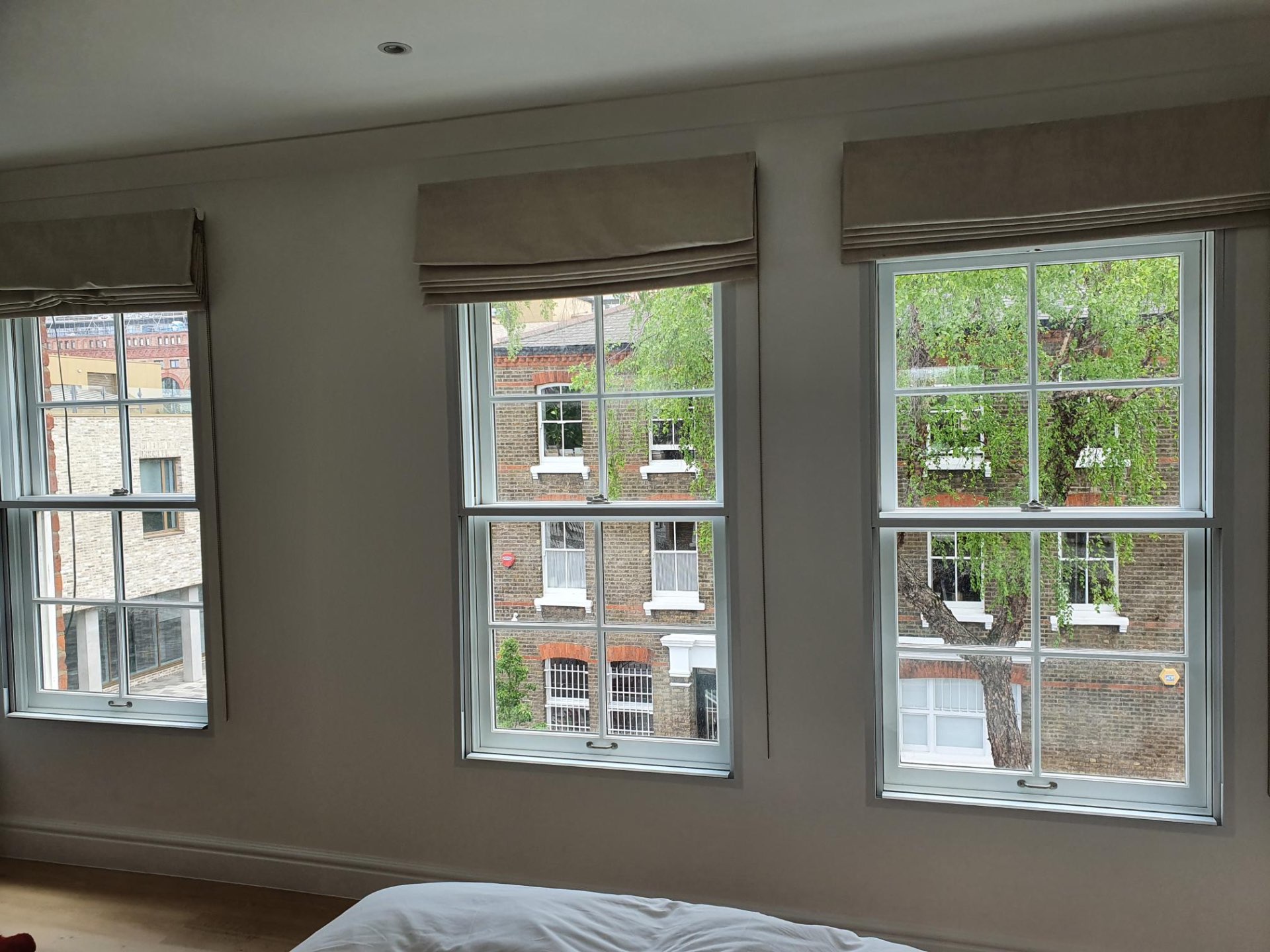
Sound Transmission Guide
Learn about how sound travels through windows and how secondary glazing creates effective barriers.
Read Sound Transmission Guide
Noise Reduction Calculator
Calculate potential noise reduction based on your specific window configuration and requirements.
Try Noise Reduction CalculatorRelated acoustic and specification resources
Continue with the detailed guidance behind these figures, or see how the same specification is applied on London's noisiest streets.
Best acoustic glass compared
Stadip Silence vs standard laminate, with Rw and Ctr data.
Acoustic glass noise comparison guide
Decision tree for choosing glass by noise source.
Sound insulation service
Survey, specification and installation for noise-led projects.
Air gap performance
How cavity depth changes acoustic and thermal results.
Clapham busy roads
Arterial traffic noise treatment in South London.
King's Cross rail noise
Low-frequency rail noise specification.
Heathrow flight paths
Aircraft noise glazing under the western approach.
Compliance hub
BS 8233, Part F and listed building consent guidance.
Listed buildings glazing
Acoustic upgrades that keep original windows intact.
Ready to create a quieter home or office environment?
Request a Free Consultation